What Is a Wedding Venue?
A wedding venue is the place where your ceremony, your reception, or both are held, together with the spaces, services and house rules that come with it. It is usually the first big decision in your planning, because it sets your date, your guest limit, your budget and the look of the day.
Venues come in two broad models. A blank-canvas venue gives you the space and you bring in everything else: caterer, furniture, sound, lighting and decor. An all-inclusive venue bundles the space with catering, staffing, coordination and equipment under one team. Neither is better, but they change how much you coordinate and how you compare prices.
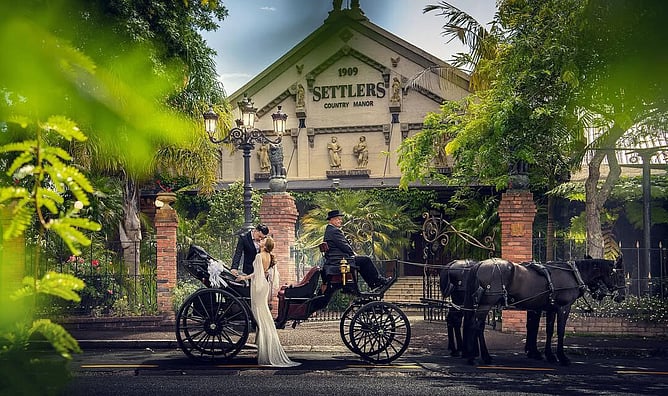
Types of Wedding Venues
The main venue types differ in atmosphere, how much is included, and how much risk the weather adds. Use this list to shortlist two or three types before you start touring.
Garden or country estate. Best for couples who want scenery, photos on site, and ceremony plus reception in one place. Watch out for the weather plan and travel time from town.
Historic manor or heritage house. Best for character, architecture and a timeless look. Watch out for layout limits, accessibility and noise rules.
Hotel or function centre. Best for convenience, guest accommodation and a predictable setting. Watch out for a more generic look and tighter finish times.
Beach or coastal. Best for dramatic backdrops and a relaxed mood. Watch out for wind, tides, permits and needing a separate reception venue.
Vineyard or winery. Best for a food and wine focus and rows of vines for photos. Watch out for seasonal access and limited wet-weather space.
Marquee on private land. Best for total control over layout and style. Watch out for hiring toilets, power, flooring and heating yourself.
Church or community hall. Best for traditional ceremonies and lower hire costs. Watch out for needing a second venue and outside catering.
Things to Consider When Choosing a Wedding Venue
Start with the factors that are hardest to change later: budget, guest count and date. Style comes next, because most venues can be styled but few can be resized.
Budget and pricing structure. Compare like with like. Some venues charge a hire fee plus catering, bar and equipment. Others price per guest with everything included. Ask for a full written quote from each venue you shortlist.
Location and travel. Think about how long your guests will drive, where older relatives will stay and whether parking is easy.
Style and atmosphere. Walk the grounds and rooms in person. Photos hide ceiling heights, noise and how a space feels with 100 people in it.
Season and weather. A venue that works in all seasons gives you the most freedom with your date.
Guest experience. Look at accessibility, toilets, shade or heating, and where guests wait between the ceremony and dinner.
Photography. Ask how many backdrops are on site. Variety saves travel time on the day.
Cultural needs. If your wedding includes rituals, long timelines, several outfit changes or specific menus, ask whether the venue has hosted similar celebrations.
Venue Details to Confirm
The fine print decides how smooth the day feels. Ask for each of these in writing, and compare them across venues.
Hire time. Decides how long the party can run.
Latest finish. Sets your evening programme.
Venue hire fee. Changes how you compare quotes.
Deposits and payment dates. Affects your cash flow.
Final guest numbers deadline. Your last chance to adjust costs.
Children's pricing. Can lower the cost for family weddings.
Parking. Affects every guest's arrival.
Accessibility. Needed for older or less mobile guests.
Getting-ready space. Saves a stressful morning.
Accommodation. Lets you end the night on site.
Ceremony Capacity
Ceremony capacity is how many guests can sit comfortably, with room for an aisle, a signing table, musicians and the wedding party. A space that holds 150 people standing may seat only 100 in rows, so always ask for the seated figure.
Check these points when you compare ceremony spaces:
Seating layout. Rows with a centre aisle fit the most guests. A semicircle or a split aisle feels more intimate but takes more room.
Indoor and outdoor options. You want a ceremony space for every season, not only for a perfect day.
Furniture included. Ask whether chairs, a signing table and sound are part of the price.
Sightlines and sound. Large groups need microphones, and everyone should see the couple.
Reception Capacity
Reception capacity needs more room per guest than a ceremony, because tables, a buffet or plated service, a bar and a dance floor all share the space. Always ask whether a quoted capacity is for a seated dinner or a standing cocktail event. The two can differ a lot.
Questions to ask about any reception space:
Does the stated capacity include a dance floor, a DJ or band area and the head table?
Can the room take round tables, long banquet tables or both?
Is there a separate space for drinks before dinner, so the main room can be set up?
Are there indoor-outdoor areas for guests who want a break from the music?
How to Determine Venue Size Based on Guest Count
Multiply your guest count by the floor space each guest needs for your layout. The figures below are common planning rules of thumb, not guarantees, so confirm them with any venue you are considering.
Ceremony, seated in rows: about 0.6 m² per guest, so 72 m² for 120 guests.
Cocktail, standing: about 0.9 m² per guest, so 108 m² for 120 guests.
Seated dinner with a dance floor: about 1.7 m² per guest, so 204 m² for 120 guests.
Four steps turn this into a decision:
Count your likely guests, not your dream list. Include the couple, children and any vendors who need a seat.
Pick the layout for each part of the day, then multiply by the figure above.
Add about 10% as breathing room for a bar, a gift table or a band.
Ask the venue for its own seated figures and compare them with yours.
Avoid a room that is too large as well. A small group in a very big hall can feel empty, so look for a venue that can scale its layout up or down.
Venue Services
Venue services decide how much work lands on you and on the day itself. Ask exactly what is included, what costs extra and who runs each part on the day.
Catering. Look for buffet and plated options, dietary and cultural menus, and a chance to taste before you commit.
Bar and beverages. Check what the drinks package covers, for how long, and how spirits are charged.
Coordination and staffing. A venue team that sets up the ceremony, runs the room and works with your vendors takes a lot of pressure off the day.
Sound, lighting and screens. A ceremony sound system, wireless microphones for speeches, dance floor lighting and a large screen for slideshows are worth asking about.
Decor and furniture. Included chairs, tables, linen, runners, easels, a cake table and a present table reduce what you need to hire.
Getting-ready space. A private bridal room with a bathroom keeps preparation calm and close to the ceremony.
Accommodation. Staying on site means no travel after the last dance.
Vendor Flexibility
Vendor flexibility is how freely you can bring in your own caterer, DJ, florist, decorations or drinks. Some venues require exclusive suppliers, while others welcome outside vendors with notice or a fee. Ask early, because it changes both your budget and your creative options.
Ask each venue:
Can we bring our own caterer, and does the price change?
Can we hire our own DJ, band, photographer, florist and celebrant?
Can we bring our own decorations and styling pieces?
Can we bring our own wine or champagne, and is there a corkage fee?
When can vendors arrive to set up, and do they need to be pre-approved or insured?
Whichever route you choose, share your vendors' details with the venue early so setup times and logistics can be coordinated.
Venue Flexibility
Venue flexibility is how well the venue itself can adapt to your plans, from your date to your guest count to the way your day unfolds. Plans change, so a flexible venue gives you room to adjust without paying heavily for it.
Ask each venue about:
Dates. Do prices or minimum guest numbers change by season or day of the week? A weekday, Sunday or off-peak date can lower costs and widen your choice.
Layout and capacity. Can the space scale up or down if your guest list grows or shrinks? A venue that only works for one group size leaves little room to move.
Timing. How long is the hire, and can it be extended? Ask about the latest finish, and how early you and your vendors can get in to set up.
Changes along the way. When must final guest numbers and menus be locked in? What happens if you need to change the date, or cancel?
Room for traditions. Can the schedule stretch for rituals, cultural performances, several outfit changes or a long family photo session?
Ceremony and reception options. Can you hold both in one place, add a drinks break between them, or move parts of the day indoors or outdoors as needed?
Get every answer in writing. Verbal assurances are easy to forget by the time the wedding comes around, and a clear contract protects you if circumstances shift.
What Happens If It Rains?
A good venue has a wet-weather plan that keeps the ceremony, photos and arrival feeling like part of the day, not a compromise. Ask to see the back-up space in person, and ask how it looks when set up for your guest count.
Questions to put to every venue:
Is there a covered or indoor ceremony space for the full guest list?
Who decides to move indoors, and by when?
Will the same decor, sound and seating be set up there?
Where will photos be taken if the lawns are wet?
Are any items, such as aisle carpet, unavailable in wet conditions?
When to Book Your Wedding Venue
Book as soon as you have a guest range, a budget and a date window. Popular venues fill their best dates, especially Saturdays in the warmer months, long before the wedding, so couples who plan about a year or more ahead have the most choice. A shorter timeline can still work if your dates are flexible.
A simple order of events:
Agree your guest range, budget and must-haves.
Shortlist two or three venues and ask for pricing and available dates.
Book viewings, preferably at the time of day your wedding will run.
Confirm in writing what is included, then sign the contract and pay the deposit to secure the date.
Note the later deadlines: further deposits and the final guest numbers.
Flexibility can lower costs. Minimum guest numbers and prices often vary by season and day of the week, so a weekday or off-peak date can suit smaller or more budget-conscious weddings. Ask which deposit confirms the booking and when further payments fall due.
Final Thoughts
The best wedding venue is the one that fits your guest count, budget, style and weather plan, and that is clear about what is included. Start with your must-haves, compare venues on the same questions, and ask for every answer in writing.
Visit your shortlist in person, ideally at the time of day your wedding will run, and picture the whole day: arrival, ceremony, photos, dinner and the last dance. If a venue feels right in that walk-through and the details hold up, you can book with confidence.