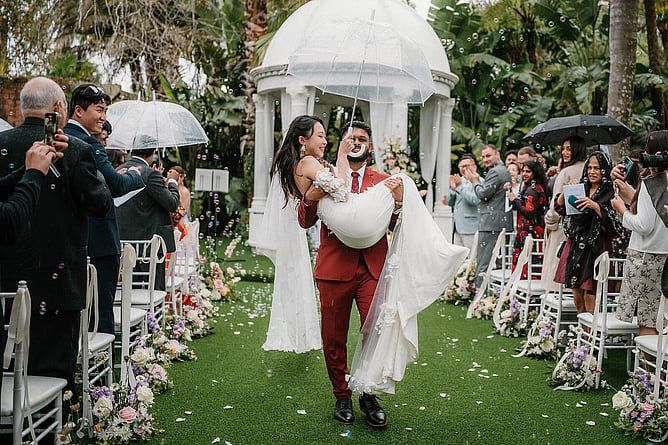
Some of the best wedding photos aren't the ones where everyone is lined up and smiling on cue — they're the ones that feel like a genuine moment: a laugh caught mid-sentence, a hand brushing away happy tears, the light hitting just right as you walk under the trees. Getting photos that feel natural rather than staged isn't about luck. It comes down to timing, planning, and choosing the right settings.
Here's how to set yourself up for wedding photos that feel like you, not a stiff studio session.
Choose the Best Time for Portraits
Light changes the mood of a photo more than almost anything else. Midday sun is harsh and creates unflattering shadows under eyes and noses, while the hour or two before sunset — often called golden hour — gives photos a soft, warm glow that looks flattering on everyone and feels far less "posed."
If your ceremony is in the afternoon, consider scheduling a portion of your portraits for golden hour, even if that means stepping away from the reception briefly. Many couples find that a relaxed walk with their photographer as the light softens produces some of their favourite images of the whole day — precisely because there's no crowd, no pressure, and no need to perform for a camera.
Overcast days, by contrast, are a hidden advantage: soft, diffused light is one of the easiest conditions for natural-looking portraits, so don't panic if your forecast isn't blue skies.
Build a Realistic Photography Timeline
Rushed photos look rushed. One of the most common regrets couples share afterward is not allowing enough time for photography, which leads to a hurried, herded feeling in every shot.
A realistic timeline should include buffer time for:
Hair and makeup running slightly over (it almost always does)
Guests arriving and mingling before formal photos begin
Transitions between locations, especially if you're moving between indoor and outdoor settings
A few unscheduled minutes simply to breathe before the ceremony
Talk to your photographer in advance about how long they need for couple portraits, group shots, and candid coverage, and build the day's schedule around those numbers rather than squeezing photography into whatever gaps are left. A well-paced day is one of the biggest contributors to photos that feel relaxed rather than rushed.
Prepare Family Photo Lists Ahead of Time
Group photos are notorious for feeling stiff — largely because they're often improvised on the day, with someone shouting names while relatives wander off to find a bathroom or a drink. The fix is simple: prepare a written list of every group combination you want photographed, and share it with your photographer (and a designated family member or planner) before the day arrives.
A good list is organised by group, not by individual. For example:
"Bride + both sets of parents"
"Groom's siblings only"
"Immediate family, all generations"
Keep the list to the combinations that matter to you; over-engineered lists are usually where formal photo sessions go from twenty minutes to sixty.
Assigning one person — often a wedding planner, coordinator, or a well-organised bridal party member — to help gather people quickly by group is one of the best ways to keep this part of the day moving and low-stress.
Make the Most of Natural Light
Natural light is more flattering than flash or artificial lighting. Rooms with large windows, high ceilings, or good afternoon light will photograph far better than dim corners, so it's worth walking your ceremony and reception spaces with your photographer beforehand to identify where the light is best throughout the day.
A few simple habits help:
Face toward windows or open doors rather than away from them for portraits
Avoid direct overhead sun for outdoor shots — dappled shade under trees is often more flattering
Ask your photographer which times of day work best in each specific space, since light shifts noticeably from morning to late afternoon
Choose Locations That Do the Work for You
A location with genuine character does a lot of the heavy lifting for a natural-looking photo, because it gives you and your photographer something to react to, rather than posing against a blank backdrop.
Look for variety within a short distance: garden pathways, water features, mature trees, or interesting architecture all give a photographer different angles and light without needing to travel far or disrupt your day's schedule. If your venue is near a distinctive natural landmark — a beach, a coastline, or open countryside — even a short 10–15 minute detour can add a different set of images to your gallery, offering contrast to the more traditional venue shots.
The goal is to give yourselves a few different "scenes" to move through during the day, so photos don't all look the same — without adding so much travel time that it eats into the timeline you worked hard to plan.
Final Thoughts
Photos that feel natural aren't really about "acting natural" in front of a camera — they come from good light, unhurried time, and a location that gives you something real to do rather than something to perform. Get those three things right, and the rest tends to take care of itself.