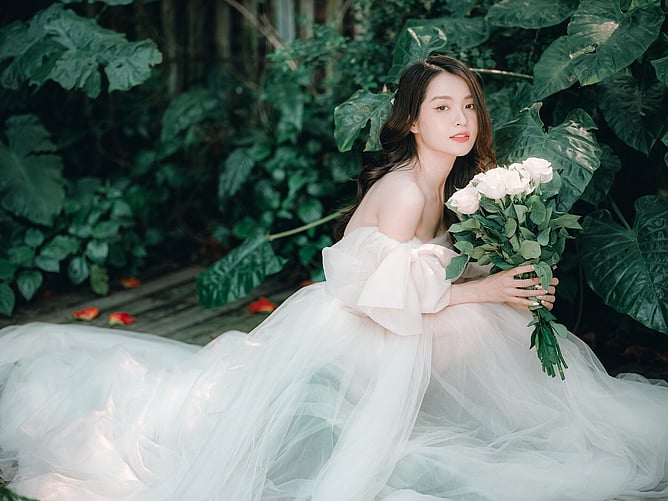
A wedding dress is one of the few things you’ll plan down to the last stitch. If off-the-rack styles never quite feel like “you”, a custom wedding dress is worth considering. It’s made around your measurements, your taste and your wedding day, rather than adjusted from a sample.
This guide covers the questions brides ask most: what a custom dress costs, how to get one, where designer gowns are sold, and what a bustle is.
Custom, Designer or Off-the-Rack: What’s the Difference?
These terms get mixed up, so here’s how they differ.
Off-the-rack (or ready-to-wear) dresses are sold in standard sizes. You try on a sample, order your size, and have it altered to fit.
Designer wedding dresses come from an established label’s collection. They’re made to that label’s design, often in a set range of sizes, and can usually be ordered through a bridal boutique.
Custom or bespoke wedding dresses are designed and made for one person. You work with a designer or dressmaker on the silhouette, fabric, neckline and detailing. Some designers also offer a hybrid option, where an existing design is modified to suit you.
How to Get a Custom Wedding Dress
The process varies between designers, but it generally runs like this.
1. Gather inspiration. Collect photos of necklines, sleeves, fabrics and silhouettes you love. Also note what you don’t like. A designer can work with a vague idea, but clear references save time.
2. Set a budget. Be realistic from the start. It’s common for the final cost to land 10 to 20 percent above the original budget, so build in a buffer. Extras such as custom veils, bustles and additional fittings are charged on top.
3. Shortlist designers and book consultations. Look at past work, read reviews and ask about their process. Many designers work with out-of-town clients by condensing visits into a consultation and measurements first, then fittings later.
4. Finalise the design and fabric. Your designer will sketch or describe the gown and suggest fabrics suited to your wedding season and venue. Silk, crepe, lace and tulle all drape and behave differently, so it’s worth asking to see samples.
5. Attend your fittings. Expect several fittings as the gown takes shape, typically starting with a toile (a test version in cheaper fabric) before the final cut.
6. Collect your dress. The final fitting is where small adjustments are made, including the bustle, which we cover below.
How Long Does It Take?
Plan for lead time. A bespoke gown typically takes between three and six months to make. Some designers ask for at least four months and charge a rush fee for anything faster. If you’re booking a wedding for next season, start the search as soon as you have a date.
How Much Does a Custom Wedding Dress Cost?
Prices vary widely depending on the designer, the fabric, the complexity of the design and how much hand finishing is involved. Here’s what New Zealand brides can expect.
Entry-level bespoke: Some New Zealand dressmakers start their bespoke gowns from around $2,500, with the price rising with design intricacy and fabric choice.
Couture: One Auckland couture house quotes most of its gowns at between $4,000 and $10,000 or more, including fittings and design.
Off-the-rack comparison: A good-quality off-the-rack dress from a New Zealand retailer often costs between $1,500 and $2,500, with customisation adding a few hundred dollars.
What Drives the Price?
Fabric: Imported lace, French silk and hand-beaded fabrics cost far more than crepe or satin.
Design complexity: Corsetry, structured bodices, long trains and layered skirts all take more hours.
Hand finishing: Beading, appliqué and covered buttons are time-intensive.
Fittings: The number of fittings can affect the final price.
Alterations: Bridal alterations generally run between $300 and $900.
Extras: Veils, petticoats, bustles and cover-ups are often priced separately.
Ways to Keep Costs Down
Choose a simpler silhouette and put the budget into fabric quality and fit.
Ask whether the designer offers a hybrid gown, which modifies an existing design rather than starting from scratch.
Consider a pre-loved custom gown. Listings for custom-made New Zealand gowns on resale sites often sit well below their original price, with examples resold in the range of NZ$1,200 to NZ$2,000.
Book early so you don’t pay rush fees.
Where to Buy a Designer Wedding Dress
If you’d rather start from an existing design, there are several places to look.
Bridal boutiques. Most larger cities have boutiques that stock several designer collections. You try on samples, choose your size and order the dress, which is then altered to fit. Auckland, for example, has multiple boutiques stocking international labels at different price points.
Designer ateliers and studios. Some designers sell directly from their own studio, which lets you speak to the person who made the gown and, in many cases, request modifications.
Sample sales. Boutiques regularly clear display gowns to make room for new collections, often at a significant discount. The catch is that you’re limited to the size and condition of what’s available.
Pre-loved marketplaces. Resale sites let you buy a designer gown that’s been worn once. Check measurements carefully, ask about cleaning and condition, and allow time for alterations.
Online retailers. These can be good for lower budgets, but you can’t try the dress on first. Check return policies and order early in case you need alterations.
Tip: Whichever route you choose, book appointments in advance, bring one or two people whose opinion you trust, and wear appropriate underwear and shoes for the fit.
What Is a Bustle on a Wedding Dress?
A bustle is a way of lifting and securing the train of your dress so it doesn’t drag on the floor. Once the ceremony and photos are done, a bustle lets you move, dance and sit without worrying about stepping on your hem.
It works by attaching the train to hidden loops, hooks, buttons or ties sewn into the dress, usually at the back of the skirt. When bustled, the fabric gathers up and sits close to the body.
Common Bustle Styles
Over-bustle: The train is lifted up and over the skirt and fastened at the waist or lower back. It’s simple and works well for most trains.
Under-bustle: The train is folded beneath the skirt and hooked up, which creates a tidy, streamlined look.
French bustle: The train is gathered in layers underneath, using a series of ties.
Ballroom bustle: Several points along the hem are gathered up to create a neat, scalloped shape.
Which style suits your dress depends on the length of the train, the weight of the fabric and the skirt silhouette. In a custom gown, the bustle can be built in from the beginning, which means it can be placed exactly where it works best for your dress.
Bustle Tips
Ask your designer about the bustle at your first consultation rather than leaving it to the last fitting.
Practise bustling at your final fitting, and have a bridesmaid or family member shown how it works.
Take a photo of the bustle points for the day, in case you need a reminder.
Questions to Ask Before You Commit
Before choosing a designer, it helps to ask:
What is included in the price, and what is charged extra?
How many fittings are included?
What is the payment schedule and cancellation policy?
How long will the dress take to make, and what happens if the timeline slips?
Can I see examples of finished gowns, or speak to a past client?
Who sources the fabric, and can I approve samples first?
Final Thoughts
A custom wedding dress is a bigger investment of time and money than buying off the rack, but many brides find the fit and personal detail worth it. Start early, set a realistic budget with a buffer, and choose a designer you feel comfortable with. Think about the practical details, such as the bustle, from the first appointment rather than the last.