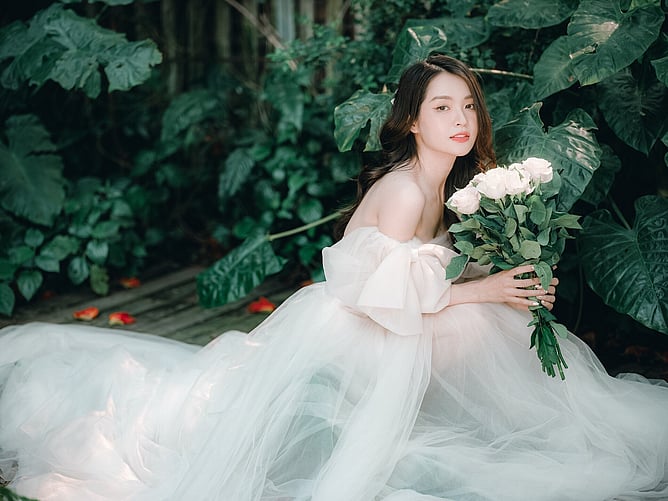
Quick answer: To choose a wedding dress, set a total budget (including alterations and accessories), decide your venue and season first, then pick a silhouette, fabric and train that suit the way you'll move through the day. Start researching 10 to 12 months out, bring only two or three trusted people to appointments, and test the full look by walking, sitting and dancing in it.
Quick checklist
Confirm venue, season and wedding style
Set a budget that covers alterations and accessories
Try 3 to 5 different silhouettes
Choose fabric for weather, setting and comfort
Order 6 to 10 months ahead
Take your shoes to every fitting
Learn how to bustle the train
Plan for photos, reception movement and any outfit changes
Choosing a wedding dress is about finding a style you love on a hanger. You also need to think about your wedding venue, the season, how much you want to spend, how easily you can move in the dress and what it will look like in your photographs.
For an Auckland wedding, those practical details matter. An outdoor ceremony can mean grass, pathways and changing weather, while your reception may call for a different look. If you are planning a cultural wedding or changing outfits during the day, the dress also needs to fit into the wider schedule.
The best wedding dress is one that feels like you, suits the setting and lets you enjoy the entire day without constantly adjusting it.
How should you choose a wedding dress?
Think about five things before you start shopping: your wedding style, venue, season, budget, and how you want to move and feel through the day. Once those are clear, the silhouette, fabric, neckline and train become much easier to narrow down.
A dress that looks beautiful in a fitting-room mirror can feel different after several hours of walking outdoors, sitting at dinner and dancing. So choose the dress for the wedding you are actually having.
How to choose a dress that suits your venue?
Your venue choice would influence the dress choice. So think about the surfaces you'll cross, the spaces you'll use and how much of the day is indoors or outdoors.
Outdoor or garden ceremony: lawns, paths and bridges favour lighter skirts and manageable trains.
Formal indoor ceremony or ballroom: more freedom for a dramatic train, fuller skirt or structured fabric.
A day that moves between settings: choose a gown that transitions with you, including the bustle, fabric and footwear.
At Settlers Country Manor, couples can choose from indoor and outdoor ceremony settings and use the gardens, lake, bridges and mature trees for photos, so the same gown may be worn in several environments in one day.
What should you decide before dress shopping?
Inspiration photos are useful, but settle these first:
The ground you will walk on — Grass, paths, steps and outdoor areas can make a long train or delicate hem impractical.
How much you will move — Consider walking between ceremony and reception spaces, greeting guests, sitting at the table and dancing later in the evening.
Your photographs — Your dress will be photographed from the front, back and side, as well as while you are moving.
The overall setting — A dress that feels right in a bright, modern boutique may look different against gardens, historic architecture or an elegant reception room.
Before buying your dress, picture yourself wearing it through the actual spaces you will use on your wedding day.
How much does a wedding dress cost in New Zealand?
NZ wedding budget guides for 2026 put dress or suit spending at around $800 at the low end, around $2,500 in the mid-range and $8,000 or more at the top end (MoneyBalance NZ). As a share of the whole wedding budget, dress and attire come to about 6% (Bridebook NZ). Your own figure will depend on whether you buy new, pre-loved or made-to-order.
The important thing is to set your total dress budget. Your dress budget should cover:
The wedding dress — Include the gown itself and any custom options.
Alterations — Hemming, adjusting straps, taking in the bodice and other tailoring can add to the final cost.
Veil or headpiece — These are often chosen after the dress, so make sure they are included in your budget.
Shoes — Your shoes can affect the final length of the dress, so choose them before your final fitting where possible.
Undergarments — The neckline, back and construction of your dress may affect what you need underneath.
Jewellery and accessories — Consider these as part of the complete bridal look.
Cleaning or preservation — This is an optional post-wedding expense.
A second outfit — If you plan to change for the reception or another part of the day, include the additional outfit and its alterations.
Ask what is included in any quoted price. A gown that fits your budget can become expensive once alterations and accessories are added.
The right budget is one that fits within your overall wedding plans.
When should you buy your wedding dress?
For a made-to-order wedding dress, starting early gives you flexibility. A useful planning guide is:
Start researching 10 to 12 months before the wedding. Look at different silhouettes, fabrics and designers and work out what you are drawn to.
Visit bridal boutiques around 9 to 12 months before. This gives you time to try different styles without feeling pressured to make an immediate decision.
Order a made-to-order gown around 8 to 10 months before. Exact lead times vary between designers, so confirm this before placing your order.
Plan your first alterations around 3 to 4 months before. This allows time for adjustments as the wedding approaches.
Have your final fitting around 2 to 4 weeks before. Bring your wedding shoes and any relevant undergarments or accessories.
If your wedding is less than eight months away, do not assume you have left it too late. Ask boutiques about sample gowns, off-the-rack options and dresses that can be ordered within a shorter timeframe.
Avoid buying without leaving enough time for the dress to arrive, be altered and fitted.
Which wedding dress silhouette should you choose?
There is no the best wedding dress silhouette. The best option is the one that gives you the shape, movement and level of comfort you want.
It is also worth trying styles you did not have in mind. A dress can look different on your body compared with how it looks on a hanger or model.
A-line
An A-line dress gradually widens from the waist and is one of the most versatile options. It can work well if you want freedom of movement while still having a traditional bridal silhouette. It is also practical for a wedding day that includes outdoor photographs, walking between spaces and a reception.
Ballgown
A ballgown creates a dramatic, formal silhouette and can make a strong entrance in a grand reception setting.
The trade-off is volume. A full skirt may not be convenient on narrow pathways, steps or uneven outdoor surfaces, so think about how much of your day will be spent outside.
Fit-and-flare and mermaid
These silhouettes follow the body before widening lower down. They can create a striking shape, but think about how easily you can sit, walk and dance. If you love the silhouette, make sure you can still move comfortably in the actual gown you choose.
Sheath and column wedding dresses
A sheath or column dress has a straight shape and can suit a modern, understated look. Because there is less volume, details such as fabric, lace, texture, neckline and back design can have visual impact.
Empire wedding dresses
An empire silhouette sits higher under the bust and falls loosely through the body. It can suit relaxed or garden-style weddings and can be a comfortable option if ease of movement is important to you.
The test is simple. Once you are wearing a dress, walk, sit, turn, raise your arms and dance. If you are worried about moving in it during a five-minute fitting, imagine how you will feel after wearing it for eight hours.
What is the best fabric for each season in Auckland?
Auckland weather is one reason it is worth thinking about fabric rather than choosing a dress for its appearance.
A summer wedding can be warm during the day but cooler in the evening. Spring and autumn can be changeable, while winter weddings may involve more time indoors but still include outdoor photographs.
Summer
Lightweight fabrics such as chiffon, organza and light crepe can be worth considering for warmer days.
Think about breathability and how the dress will feel after several hours of wearing it. If you expect the evening to become cooler, you can also plan a light wrap or other layer.
Spring and autumn
Lace, crepe and light satin can work well when temperatures are not predictable. If you are planning outdoor photographs, consider having a shawl, sleeves, bolero or another layer available in case the temperature drops.
Winter
Mikado, heavier satin and long-sleeved lace can create a substantial look for a winter wedding. If you will be outside for photographs, consider how you will stay warm. A cape, coat or other bridal outer layer can be useful without changing the overall look of your dress.
Fabric also affects how a dress behaves. A lightweight skirt may move beautifully in outdoor photographs. A heavier fabric can create a structured silhouette and feel substantial for a formal reception.
If your day includes outdoor photographs, ask the boutique how the fabric behaves in wind. If your dress has a long train or veil, ask how it can be managed between photographs and the rest of the day.
How should you choose a dress that looks good in photos and at the ceremony?
Guests and photographers see your dress from every angle. Think about the neckline, back, train length, veil, sleeves and how the skirt moves when you walk. A flowing skirt or veil creates movement outdoors, a detailed back becomes a feature during the ceremony, and a longer train can create a dramatic image on steps or lawns.
At Settlers Country Manor, couples can photograph against gardens, water, bridges, mature trees and heritage interiors, plus nearby Muriwai Beach, just seven minutes away. Lighter flowing fabrics suit sea breezes, while heavy or long designs may need help.
Visiting the venue before finalising your dress helps you picture the walk down the aisle.
Will your dress work for the reception?
After the vows you may spend hours sitting, greeting guests, cutting the cake, dancing and moving between indoor and outdoor areas. A long train that looks incredible in the ceremony needs a bustle afterwards. A structured gown needs thought for sitting and dancing.
You need to know how it will work once the formal part is over. Ask the boutique how the gown bustles, and practise before the day.
How do cultural wedding traditions affect your dress choice?
For many cultural weddings, the ceremony and reception may involve different traditional garments, a second bridal look or a change into something comfortable for dancing.
This is something to think about before finalising your dress because the change affects your clothing. Consider the following:
how long the outfit change will take
who will help you change
whether your jewellery or accessories need to change
whether your hairstyle needs to accommodate both looks
where you will change privately
how the outfit change fits into your photography schedule
whether you want photographs in both outfits
Settlers Country Manor hosts weddings incorporating Indian, Asian, Māori and Pasifika, and Middle Eastern traditions, making outfit changes an important practical consideration for some couples.
The private bridal room also gives the bridal party a dedicated space to prepare and make changes during the day.
For a cultural wedding, talk through the entire sequence with your venue and wedding team rather than treating each outfit as a separate decision.
What should you take to a bridal appointment?
Bring a general idea of what you like, but stay open to trying different shapes. For a useful appointment:
bring two or three people whose opinions you trust
wear suitable underwear for trying on different necklines and backs
bring shoes with a similar heel height to your wedding shoes if possible
bring inspiration photos
tell the stylist about your venue and wedding plans
take photographs if the boutique allows them
give yourself enough time to try several silhouettes
Try not to turn the appointment into a group vote. Too many opinions can make it harder to work out what you actually like. The people you bring should help you think through the decision.
How do you know when you have found the right dress?
Forget the idea that every bride has to experience a dramatic movie-style moment. Instead, ask yourself practical questions.
Can you sit comfortably?
Can you walk without constantly lifting the skirt?
Can you hug someone?
Can you raise your arms?
Can you dance?
Do you like the way you look from the front and back?
Do you still feel like yourself?
Trends can be useful for inspiration, but your wedding photographs will stay with you long after a particular style has gone out of fashion.
If you love the dress, feel comfortable in it and can imagine wearing it through the entire day, those are much stronger signs than whether it is considered the most fashionable silhouette.
A simple wedding dress checklist
Before placing your order, make sure you can answer these questions:
What is my total dress budget?
Does that budget include alterations and accessories?
What season is my wedding?
How much time will I spend outdoors?
What surfaces will I be walking on?
How much movement do I need?
Where will my main photographs take place?
Do I need to accommodate a veil or long train?
Will I be changing outfits?
How long will the dress take to arrive?
How many fittings will I need?
Can I sit, walk and dance comfortably in it?
If you can answer those questions, you won't be choosing a dress based only on how it looks for five minutes in a boutique.
See how your dress could look on the day
Choosing your dress becomes easier when you can picture the entire day. If you are still deciding what kind of dress will work best for your wedding, seeing the venue in person can help you make that decision with the whole day in mind.