You have found the venue, chosen the date and started on the guest list. Now comes one of the most personal decisions of all: the rings. Knowing how to choose a wedding ring can feel overwhelming, with so many metals, styles, budgets and traditions to weigh up. The good news is that it gets much easier once you break it into a few simple questions.
This guide covers everything couples ask about rings, from cost and sizing to who carries them down the aisle.
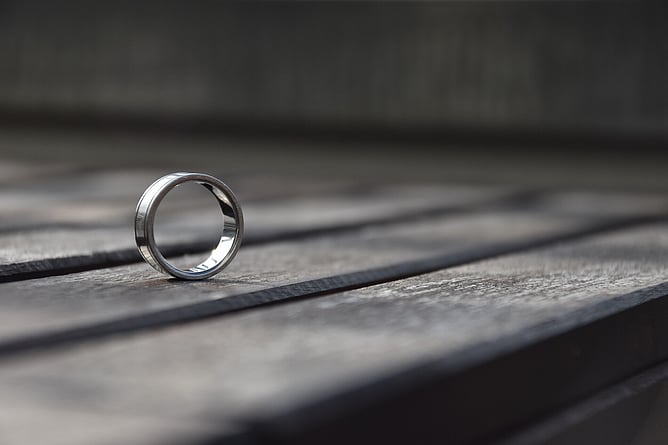
How to Choose a Wedding Ring: Start With These Five Things
Before you visit a jeweller, it helps to settle the basics. Choosing a wedding ring comes down to five decisions:
Budget. Decide what you are comfortable spending before you fall in love with something out of range.
Metal. Yellow, white or rose gold, platinum, titanium, tungsten and ceramic all wear differently. Softer metals like 9ct and 18ct gold can scratch over time, while titanium and tungsten are very hard-wearing.
Width and profile. A slim band feels delicate, while a wider band feels bolder. A domed (court) profile is the most comfortable for everyday wear.
Lifestyle. If you work with your hands, play sport or travel often, durability and comfort matter more than ornate detail.
Pairing. Think about how the wedding band will sit alongside an engagement ring, or whether you want matching rings as a couple.
Take your time, try several styles on, and choose a ring you will happily wear every day for decades.
How Much Is the Average Wedding Ring?
There is no single price, because wedding rings range from simple, affordable bands to heavily set designer pieces. There is no official average for wedding rings in New Zealand, and published figures vary widely. For context, one New Zealand jeweller reports that couples spent about $5,800 on an engagement ring in 2024, and wedding bands usually cost much less because they rarely carry a large centre stone. As a general rule, titanium and tungsten bands are the most affordable, gold bands cost more, and platinum is usually the most expensive, often two to three times the price of a comparable gold band. Rings set with diamonds or other gemstones cost more again.
The main factors that affect price are:
Metal type and weight. Platinum and higher-carat gold cost more than lower-carat gold or alternative metals.
Width. A wider band uses more metal.
Stones. The number, size and quality of diamonds or gemstones add to the cost.
Custom work. Made-to-order and engraved designs typically cost more than ready-made rings.
Prices vary between jewellers and change with the price of precious metals, so get quotes from a few reputable local jewellers. Many couples also set a joint rings budget early, so it sits comfortably within the overall wedding budget.
Which Hand and Finger Does the Wedding Ring Go On?
In New Zealand, and in most English-speaking countries, the wedding ring is worn on the fourth finger of the left hand, also known as the ring finger. The ring is placed on this finger during the ceremony as part of the exchange of rings.
This is not universal. In several countries, including Germany, Poland, Norway and Russia, the wedding ring is traditionally worn on the right hand. Some cultures and religious traditions have their own customs, so it is always worth checking what feels right for you and your families.
Why Is the Wedding Ring Worn on the Left Hand?
The most popular explanation goes back to ancient Rome. It was believed that a vein ran directly from the fourth finger of the left hand to the heart, called the vena amoris, or "vein of love". We now know that this is not anatomically true, but the romantic idea stuck.
There are also practical reasons. Most people are right-handed, so wearing the ring on the left hand protects it from knocks and wear during daily tasks. Whatever the origin, the left ring finger has become a lasting symbol of commitment in many parts of the world.
Should I Wear My Engagement Ring on My Wedding Day?
Yes, most brides do, and there is no wrong answer. There are three popular ways to handle it:
Move it to the right hand for the ceremony. Wear your engagement ring on your right hand as you walk down the aisle, then move it back to your left hand, above your new wedding band, after the vows.
Wear it on the left hand throughout. Some couples slide the wedding band on first, then wear the engagement ring on top, or simply have the band slipped on below the engagement ring.
Leave it at home or with a bridesmaid. If your engagement ring has a tall setting that gets in the way of the ring exchange or your photos, you can take it off and wear it afterwards.
If you plan to wear both together, ask your jeweller whether the two rings sit flush against each other. A mismatched pair can rub or leave a gap, so it is worth trying them together before the day.
How to Wear a Wedding Ring and an Engagement Ring
The traditional way is to wear the wedding band closest to your heart, with the engagement ring sitting above it on the same finger. This order keeps the wedding band, the ring you received first at the altar, nearest the base of the finger.
A few practical tips help the two rings sit comfortably together:
Put the wedding band on first, then the engagement ring. This is the traditional order, and it is easy to switch if the pair feels tight.
Check that the rings sit flush. If the engagement ring has a high setting or an uneven shape, a curved or contoured band can stop the rings twisting or leaving a gap.
Consider a spacer or guard ring. A thin ring between the two can stop them rubbing and protect each ring from scratches.
Wear them on separate hands if stacking is uncomfortable. Some people wear the engagement ring on the right hand, or alternate depending on the occasion.
Take them off for heavy work. Remove both rings for the gym, swimming, gardening and cleaning with strong chemicals, as these can loosen stones and damage metal.
Clean and check them regularly. Have a jeweller inspect the settings once a year so stones stay secure.
What Is a Wedding Ring Set?
A wedding ring set is a matching or coordinated pair or trio of rings. The term is used in a few ways:
Bridal set. An engagement ring and a wedding band designed to sit together perfectly.
Trio set. An engagement ring, a woman's wedding band and a man's wedding band in matching metals and styles.
His and hers set. Two wedding bands for the couple, usually in the same metal with a similar or complementary design.
Sets can be a convenient and sometimes cost-effective way to buy, and they take the guesswork out of matching metals and profiles. If you prefer something more individual, there is no rule that your rings need to match. Many couples choose different styles that reflect each person's taste, with a shared engraving or metal tying them together.
How to Choose a Wedding Band for an Engagement Ring
The best wedding band for an engagement ring is one that matches the engagement ring's metal, sits flush against it and feels comfortable to wear every day. Start with the engagement ring, because its shape decides which bands will work.
Match the metal. Pairing a yellow gold engagement ring with a white gold band can look mismatched, and softer and harder metals worn side by side can wear each other down over time.
Look at the setting height. A low, flat setting works with a straight band, while a high setting often needs a curved, notched or contoured band that wraps around it.
Balance the widths. A slim band complements a bold, detailed engagement ring, while a wider band suits a simple solitaire.
Think about stones. A plain band lets a statement diamond take centre stage, while a band set with small diamonds adds sparkle and can echo the engagement ring.
Try them on together. Always see both rings on your finger at once, since a band can look different next to the engagement ring than it does alone.
If your engagement ring was made by a jeweller, ask them whether they can design or recommend a matching band, so the two fit perfectly.
What Does a Black Wedding Ring Mean?
A black wedding ring has no single official meaning. It is a style choice that has become increasingly popular, particularly for men's rings. Black bands are typically made from tungsten, black ceramic, black titanium, black zirconium or metal with a black coating.
The appeal is usually a mix of:
A modern, understated look that stands out from traditional gold and silver.
Strength and durability, because many black rings are made from very hard metals.
Personal symbolism. Some wearers see black as representing strength, loyalty and a bold, lasting commitment.
One practical tip: black rings made from ceramic or tungsten are hard but can chip or shatter under a sharp impact, and they usually cannot be resized. Coated black rings can also wear through over time, so ask your jeweller about long-term care and resizing options before you buy.
Who Buys the Man's Wedding Ring?
Tradition says the bride buys the groom's ring and the groom buys the bride's, so each partner gives the other a ring that the other then wears. Today, though, couples do whatever works for them. Common arrangements include:
Each partner buys the other's ring as a gift and a surprise.
The couple shops together and shares the cost, which is especially helpful for choosing metals and finishes that match.
Each person buys their own ring, so they get exactly what they want.
Families contribute, particularly where heirloom rings or cultural gifts are part of the tradition.
There is no right or wrong way. The key is to talk about it early so that the rings, and the budget, are agreed well before the big day.
What Is a Wedding Ring Bearer?
The ring bearer is the person who carries the wedding rings down the aisle during the ceremony. It is traditionally a young boy, often a nephew, cousin or family friend, but it can be a girl, an older relative or even a much-loved pet.
The ring bearer usually carries the rings on a small cushion, in a box, or tied with ribbon. Because young children can be easily distracted, many couples give the ring bearer a pair of decoy rings, while the best man or maid of honour keeps the real ones safe. After the walk, the ring bearer hands over the rings, or sits with their family, and the real rings are exchanged during the vows.
How to Tell If the Ring Size Fits the Finger
Getting the size right is essential. A ring that is too loose can slip off, and one that is too tight is uncomfortable and difficult to remove. Here is how to tell whether a ring fits well:
It slides over the knuckle with slight resistance, then sits snugly at the base of the finger.
It turns with a little effort but does not spin freely or slide off when you lower your hand.
It does not leave a deep dent or make the skin bulge around it.
It feels comfortable in different conditions.
Fingers change size throughout the day, so keep these tips in mind:
Measure in the afternoon or evening, when your fingers are at their normal or slightly larger size.
Avoid measuring when your hands are very cold or hot, or straight after exercise or a salty meal.
Size up for wide bands. A wider band feels tighter than a slim one, so you may need a half size larger.
Allow for your knuckle. If your knuckle is larger than the base of your finger, choose a size that passes the knuckle comfortably.
Ask a jeweller to size you professionally. They have proper sizers and can check the fit for different widths. In New Zealand, ring sizes are typically given in letters, such as M, N or O.
If you are ordering a ring online or having one made, order well ahead of the wedding date, so there is time for resizing if needed.
Final Tips for Choosing the Perfect Wedding Ring
Start shopping early. Allow at least two to three months, longer for custom designs.
Try before you buy. Photos rarely capture how a ring looks and feels on your hand.
Think long term. Choose a style and metal you will still love in 20 years.
Ask about care and warranties. Find out about resizing, polishing, insurance and repairs.
Insure your rings. Add them to your home or contents insurance after you buy them.
Choose what feels like you. Trends come and go, but a ring that suits you will always feel right.