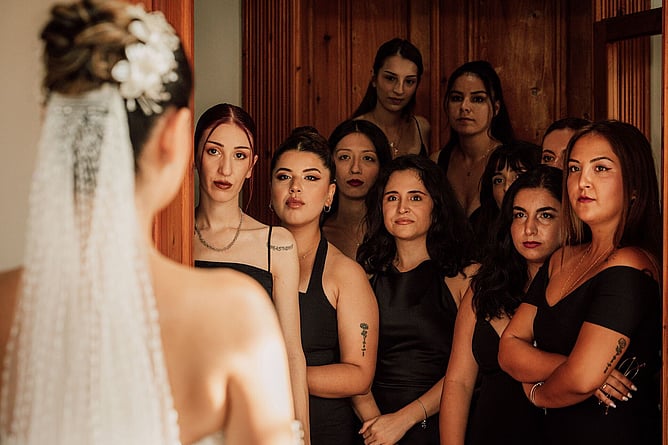
Almost everyone in the wedding world has heard the word "bridezilla". It gets used as a joke, as a warning and as a way to brush off a bride who simply knows what she wants. In this guide we look at what the word means, where it came from and why it deserves to be retired. More usefully, we share practical ways to plan a wedding that feels like yours, without losing your sanity or your relationships along the way.
What Is a Bridezilla?
"Bridezilla" is a slang term for a bride who is seen as excessively demanding, controlling or emotional while planning her wedding. The picture it paints is of a woman who rampages through the planning process, snapping at suppliers, issuing ultimatums to family and treating the day as though it exists only for her.
In practice, the label is applied much more loosely than that. A bride who sends a detailed brief to her florist, insists on a particular menu or simply cries after a long week of planning can find herself called a bridezilla by friends, relatives and even strangers online. That gap between the stereotype and the reality is exactly why the term is so controversial.
Where Does the Term "Bridezilla" Come From?
The word is a blend of "bride" and "Godzilla", the giant monster from the Japanese film that first terrorised cinema audiences in 1954. The joke is that a bride who becomes difficult turns into a creature that flattens everything in her path.
The term is generally traced to a 1995 Boston Globe article by writer Diane White on wedding etiquette. In it, wedding professionals used the word for brides they found demanding and obnoxious. Dictionaries record it as entering English in the mid-1990s.
It became a household word in 2004, when the American reality series Bridezillas began showing the most extreme moments of brides-to-be. Researchers and commentators note that these shows rarely showed the months of planning, pressure and expectation behind those moments. Today the word is used throughout the English-speaking world, including here in New Zealand.
Why We Should Stop Using the Term "Bridezilla"
The word may feel like harmless fun, but there are good reasons to leave it behind.
It only targets women. There is no matching word for a groom who cares a great deal about his wedding. Wedding professionals who have spoken publicly about the term describe it as an insult aimed at an aspect of womanhood.
It pathologises normal stress. A clinical psychologist who works with engaged couples has described the label as a way of turning an ordinary response to high stress into a character flaw.
It punishes brides for having standards. Planning a wedding means making hundreds of decisions, often on a large budget, while managing other people's expectations. Having a clear opinion is not a defect.
It has been watered down. Industry voices point out that the word is now used for almost any bride who states her needs or shows emotion, which makes it easy to dismiss legitimate concerns.
It discourages brides from speaking up. A bride who fears the label may stay quiet about a problem with a supplier or a family member until it becomes a much bigger one.
Behaviour that is genuinely unkind, such as shouting at staff or humiliating loved ones, is still not acceptable, and it does not need a nickname to be addressed. Calling it out as the specific behaviour it is, rather than a stereotype about brides, is both fairer and more useful.
What Makes Someone Turn Into a "Bridezilla"?
Very few people are difficult by nature. When a bride's behaviour changes during planning, the cause is usually pressure rather than personality. The most common triggers include:
Decision fatigue. Venue, menu, flowers, music, seating, timelines and hundreds of smaller choices, all with deadlines.
Money. A wedding is often one of the largest purchases a couple ever makes, and every dollar feels significant.
Too many opinions. Parents, in-laws, friends and social media all have views, and each one adds weight to the decision.
Comparison. Endless perfect weddings on social media can quietly raise expectations to an impossible level.
Feeling unheard. When suggestions are ignored or overruled, frustration builds, and it tends to come out at the wrong moment.
Carrying the whole load. In many couples one person ends up as the project manager, handling every email, quote and RSVP on top of work and normal life.
Fear of something going wrong. The day cannot be repeated, so small risks feel enormous.
Understanding these pressures matters for friends, family and suppliers as well as for brides. A short temper in month nine of planning is usually a sign that someone needs support, not a verdict on who they are.
How to Not Be a Bridezilla
Having a strong vision is a strength. The goal is to pursue it in a way that keeps you, your partner, your suppliers and your guests on your side. These habits make the biggest difference:
Choose your top three priorities early. Decide what truly matters, whether that is the food, the photography or the music, and be relaxed about everything else.
Agree a budget and be honest about it. Share it with your partner, your venue and anyone contributing. Most conflict about money comes from unspoken assumptions.
Put requests in writing. A clear, friendly brief means suppliers know exactly what you want and nothing gets lost in a phone call.
Treat suppliers as partners. The people you hire have run many weddings. Ask what is possible and listen to their advice before you insist.
Delegate, and then let go. Give real jobs to trusted people, or to a coordinator, and resist re-checking everything they do.
Say how you are feeling before it builds. A calm "I'm overwhelmed this week, can you take the seating plan?" lands far better than an outburst a month later.
Schedule time off from wedding talk. Protect date nights and weekends with your partner where nobody mentions flowers or timelines.
Build in a buffer. Allow extra time and a little extra budget so that one late delivery does not become a crisis.
Think about your guests' experience. Comfortable seating, good food and a sensible timeline matter as much as the styling.
Say thank you, often. Appreciation costs nothing and keeps everyone motivated to give you their best.
How to Protect Your Wedding Vision from Family Politics and Outside Interference
Family opinions are often the hardest part of planning, particularly when relatives are contributing money, when two families have different traditions or when long-standing tensions come to the surface. These steps help you keep control of your day while staying kind.
Start with your partner. Agree on your shared vision, your priorities and your limits before you discuss them with anyone else, and present them as a united decision.
Decide who gets a say, and on what. You might welcome input on the guest list or the speeches while keeping the venue, menu and style as your own call. Be clear about the difference between giving input and having a veto.
Listen, thank them and decide in private. A phrase such as "Thank you, we'll think about that" acknowledges someone without committing you to anything.
Give people meaningful roles. Relatives who feel included, through a reading, a blessing, a family ritual or a special dance, are less likely to push for control elsewhere.
Be upfront about contributions. If family members are paying towards the wedding, talk openly about what that does and does not include before money changes hands.
Blend traditions instead of choosing between them. Many couples bring together two cultures or faiths. Planning which customs will appear, and when, in advance avoids on-the-day disputes.
Use a planner or coordinator as a buffer. Directing questions about timelines, layouts and logistics to a coordinator takes the pressure off you and keeps conversations factual.
Keep a simple written plan. A one-page summary of the agreed schedule and key decisions gives everyone the same reference and reduces last-minute disagreements.
Hold your ground gently. You can be warm and firm at the same time. "We've decided on this, and we're really excited about it" is a complete answer.
Bridezilla FAQs
What does bridezilla mean? It is a slang word, combining "bride" and "Godzilla", for a bride who is seen as overly demanding or difficult during wedding planning.
Who coined the word bridezilla? It is generally traced to a 1995 Boston Globe article by Diane White, which reported wedding professionals using it for demanding brides.
Is bridezilla a real word? Yes. It appears in major dictionaries as an informal, often disapproving term, although many people now consider it sexist.
What are the signs of a bridezilla? The stereotype includes rigid demands, ultimatums, outbursts at suppliers or family, and treating the wedding as entirely about the bride. In reality, these behaviours are usually signs of stress and feeling unheard.
How do you deal with a bridezilla? Stay calm, ask what is behind the stress, offer specific help and set kind but clear boundaries. Most tension eases when the bride feels heard and supported.
Final Thoughts
Planning a wedding is a big project, and big projects bring pressure. Having clear opinions, caring about details and feeling stressed along the way do not make anyone a monster. They make someone a person who cares about an important day.
If you are a bride, give yourself permission to ask for what you want and to ask for help. If you are a friend, relative or supplier, give the bride the benefit of the doubt. And if you are tempted to reach for the word "bridezilla", try describing what is actually happening instead. It is kinder, clearer and far more likely to solve the problem.