The wedding is over and the thank-you cards are in the mail. Now comes the question many newlyweds put off: what happens with your name?
A name change after marriage in NZ is simpler than most people expect, but it can feel like a long to-do list. This guide covers what the law says, which documents you need, and how to update your passport, IRD details and everything else.
Do You Have to Change Your Name After Getting Married?
No. New Zealand law doesn’t require either partner to change their name when they marry or enter a civil union. It’s your choice, and it applies equally to every couple, whatever their gender.
Many people keep their name for professional, personal or cultural reasons. Others like the idea of sharing a surname as a new family unit. Both are common, and neither is more correct than the other.
Why Do Women Take Their Husband’s Last Name in Marriage?
The tradition goes back centuries. Under English common law, which shaped New Zealand’s early legal system, a married woman’s legal identity was largely absorbed into her husband’s. Surnames were passed down the male line, so taking the husband’s name was simply the norm.
Those legal rules are long gone, but the custom stuck. Today, many women choose to take their partner’s surname because they want a shared family name, particularly if they plan to have children. Others keep their own name, and some partners reverse the tradition altogether.
What About Your Maiden Name?
There are several options, and none of them is wrong:
Keep your name. Nothing changes and there’s nothing to file.
Take your partner’s surname. This is the most common route, and your marriage certificate is usually all the proof you need.
Hyphenate or combine your surnames. For example, Smith-Jones. Some organisations only accept a marriage certificate if you simply adopt your partner’s surname, so you may need a formal name change certificate instead.
Use your maiden name as a middle name. This usually involves registering a formal name change with the Department of Internal Affairs (Births, Deaths and Marriages).
Choose a completely new surname together. This also requires a formal name change.
You can also use different names in different settings, for example your maiden name at work and your married name at home. Just be aware that your official records (passport, bank accounts and tax details) need to be consistent.
When, Where and How to Legally Change Your Name After Marriage in NZ
When? There’s no deadline. You can start straight after your wedding, or wait months or even years.
Where? There’s no single place to go. If you’re adopting your partner’s surname, your marriage certificate is your legal link between your old and new name, and you update each organisation separately. The main ones are the passport office, Inland Revenue, NZTA (for your driver licence) and your bank.
How? In most cases it goes like this:
Make sure your marriage is registered and order your marriage certificate from Births, Deaths and Marriages.
Update your passport if you plan to travel.
Update your IRD details.
Work through your other records (see the checklist below).
If you’re doing something beyond adopting your partner’s surname, such as hyphenating, adding your maiden name as a middle name or choosing a new name, you’ll generally need to apply to Births, Deaths and Marriages for a formal name change and get a name change certificate. Check the current process and fees on govt.nz.
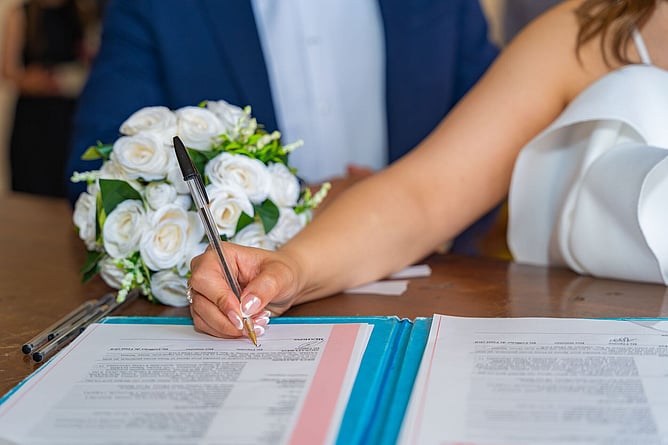
Which Name Do You Sign on the Marriage Certificate?
This is one of the most common questions newlyweds ask, and it’s easy to see why it’s confusing. The answer is that you sign with your current legal name, meaning the name you had before the wedding.
In New Zealand, your marriage is registered in the names you legally hold on the day. Your married name doesn’t exist yet, so even if you plan to take your partner’s surname, you sign the official documents with your existing name. Your marriage certificate will show your pre-marriage name for the same reason. That’s also what makes it a reliable link between your old and new name when you update your passport, IRD details and bank accounts later.
A few things worth knowing:
Signing in your old name doesn’t stop you changing it. You can start using your new name straight after the ceremony.
Commemorative certificates are different. Some couples are given a decorative or souvenir certificate to keep. It isn’t the official record, and many organisations won’t accept it as proof of a name change, so sign it however you like.
Ask your celebrant if you’re unsure. They’ll tell you exactly what to sign and where before the ceremony starts.
What Documents Do You Need?
For most updates, you’ll need:
Your marriage or civil union certificate. This is the key document. Order a few certified copies so you aren’t posting off your only one.
Photo ID, such as your current passport or driver licence.
A name change certificate if you’ve done a formal name change through Births, Deaths and Marriages.
Your birth certificate, which some organisations ask for to show your original name.
Requirements differ between organisations. NZTA, for example, asks for original documents issued in New Zealand, and an overseas marriage certificate may need special approval. If you married overseas, check with each organisation before you go.
Passport Name Change After Marriage in NZ
If you want your new name on your passport, you need to apply for a new one. You can’t just amend the existing passport.
The name in your passport can be your married or civil union name, as long as it’s your officially registered name. You’ll be asked for your previous name, your new name, the date of the change and the reason for it. If you were born in New Zealand and married here, you generally don’t need to send supporting documents, and you can apply online. If you were born overseas, or your name was changed outside New Zealand, you may need to provide original documents.
One important travel tip: the name on your plane ticket must match the name in your passport exactly. If you’ve booked a honeymoon, check which name you booked under before you apply. If your passport still shows your old name, book your tickets in your old name. If you’ve renewed it in your new name, book in your new name. Mismatched names can mean being refused boarding. Allow plenty of time for processing before any trip.
IRD Name Change Marriage in NZ
Updating Inland Revenue keeps your tax records, KiwiSaver and any Working for Families or Student Loan details correctly linked to you.
The easiest way is through myIR:
Log in to myIR.
Go to the “I want to…” tab.
Select “Manage names and addresses” under “My details”.
Choose the “Names” tab and add your new name.
You’ll need to upload a digital copy of a document that proves your name change, such as your marriage certificate. If you’d rather use paper, you can post a completed Change of Details form (IR238) to Inland Revenue.
Do this before your next tax filing or payroll change so your employer’s records match what IRD holds.
What to Do After Your Marriage Name Change
Once your passport and IRD details are sorted, work through the rest of the list. You don’t have to do it all in one week.
Driver licence. You don’t have to update it, even if you legally change your name, but most people do. You apply in person at an NZTA agent and take your evidence of name change and ID. A replacement licence has a fee, so check the current amount with NZTA.
Banks and credit cards. Take your marriage certificate and photo ID to your bank, and don’t forget your credit cards and any loans.
Employer and payroll. Let HR know so your pay slips, contracts and KiwiSaver details are correct.
KiwiSaver and insurance. Update your provider, plus your life, health, home and car insurance.
Electoral roll. Update your name with the Electoral Commission so your enrolment stays current.
Health and medical records. Tell your GP, dentist and any other health providers.
Utilities and phone. Update power, internet and mobile accounts.
Vehicle registration. If you own a car, update the registered owner details.
Professional bodies and qualifications. Contact any licensing bodies, your university or your trade organisation.
Email, social media and everyday details. Update your email signature, social profiles and loyalty cards when you’re ready.
A practical tip: keep a simple checklist and tick each one off as you go. If you hold a lot of accounts, start with the ones tied to money and identity, and leave the rest for later.
Final Thoughts
A name change after marriage in NZ is entirely your decision, and the process is manageable once you break it down. Keep your name, take your partner’s, or create something new together. Whichever you choose, your marriage certificate and a little patience will get you there.