Wedding dress alterations are a normal part of buying a gown: almost every dress needs some adjustment to fit properly, even when it is ordered in your measured size. Bridal gowns are cut to standard sizing, so the fit is rarely perfect straight off the rack. This guide explains how to alter a wedding dress, how much wedding dress alterations cost in New Zealand, when to start, how long they take, and how many sizes a dress can be altered, including vintage gowns and dresses that are too big.
How to Alter a Wedding Dress
Alterations are done by a bridal seamstress over a series of fittings, not in one visit. At the first fitting you wear your dress with the shoes and undergarments you plan to wear on the day, and the seamstress pins it to your body and agrees a plan with you.
The most common changes are:
Hemming: shortening the skirt so it clears the floor in your wedding shoes.
Taking in the waist, bust or sides: removing excess fabric through the seams for a closer fit.
Shoulder lifts and strap adjustments: raising the neckline or shortening straps so the bodice sits correctly.
A bustle: attaching hooks, loops or buttons so a long train lifts for dancing.
Bigger changes: adding sleeves or straps, changing the neckline, or adding a corset back.
A bridal alteration specialist in Auckland lists the shoulder lift, waist take-in and hem as the most frequent jobs. Lace, beading and multiple layers of tulle make each of these slower, because the detail has to be removed and re-attached by hand.
You should not alter a wedding dress yourself unless you have real experience with bridal fabrics. Seams are often finished in ways that are hard to reverse, and a wrong cut in silk or lace is rarely fixable. Be direct with your seamstress about the look and feel you want, especially if you are planning bigger changes like new straps or a different neckline.
How Many Sizes Can You Alter a Wedding Dress?
The usual rule is that a wedding dress can be taken in by about two sizes and let out by about one. Some seamstresses are comfortable taking a dress in three sizes, and a few styles, such as A-lines, can go further. Beyond that, the proportions, the pattern and the structure of the dress start to suffer.
What decides the limit is the seam allowance, the extra fabric folded inside the seams. A dress with a wide allowance can be let out; one trimmed to a quarter inch or less has almost nothing to give. Beading, lace motifs and boning also limit how far a bodice can move, because the design has to be rebuilt along the new seams.
Two practical points follow from this:
Buy to the largest part of your body. It is far easier to take a dress in where it is too big than to make a too-small dress bigger.
Ask your boutique before you commit. Different gowns have different allowances, and the consultant or seamstress can check the seams before you buy.
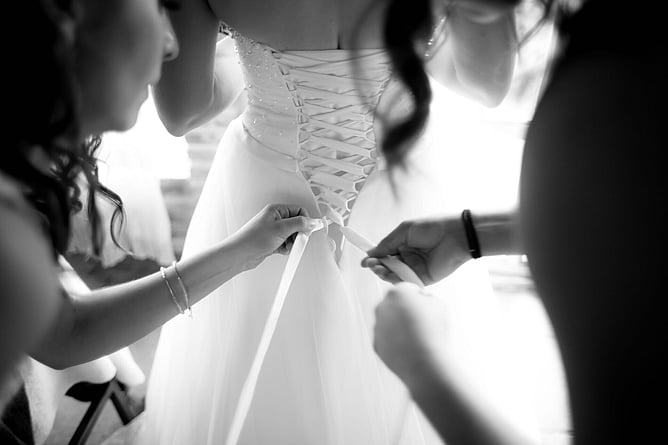
If you need to go up more than a size, your seamstress can add a lace-up corset back or insert fabric panels (gussets) at the sides of the bodice. A corset back cannot fix a skirt or hip that is too tight, so measure all three areas honestly before you order.
How to Alter a Wedding Dress That Is Too Big
A dress that is too big is the easier problem to solve. The seamstress opens the seams where the fit is loose, usually the bust, waist and hips, removes the excess fabric, and re-sews the dress to follow your shape. Because the extra fabric is simply cut away, you lose none of the original design.
A few things to expect:
Start with the biggest gaps. Shoulders and straps are usually adjusted first, then the bodice, then the length, so each step builds on the last.
Embellishments move too. On a beaded or lace bodice, the detail near the side seams has to be taken off and re-attached, which adds time and cost.
Take in gradually. Wedding gowns can generally be taken in around two sizes without distorting the dress. Past that, ask whether the dress can be recut instead.
Leave room for change. If you may lose or gain weight before the day, tell your seamstress so the final fitting can allow for it. Minor changes can be adjusted at the last fitting, but starting too early means you may pay for the work twice.
If your dress is several sizes too big, a seamstress who specialises in bridal gowns can tell you honestly whether it is worth altering. It is better to know before you start than after the dress has been cut.
How to Alter a Vintage Wedding Dress
A vintage or heirloom gown can be altered, but it needs more care, more time and a more specialised seamstress than a modern dress. The fabric is the first question: silk and lace are natural or delicate, and decades in storage can leave them weak, discoloured or brittle.
Before you buy or commit, check the following:
Test the fabric. Gently tug the fabric at an inside seam with your fingertips. If it is sturdy, alterations are realistic; if it tears or crumbles, they are not.
Check the seam allowance. Vintage seams are often trimmed very close to the stitching, so there may be no spare fabric to let the dress out. Taking in is far more feasible than letting out.
Ask a bridal seamstress first. Retail staff do not always know how a particular old gown will behave. A seamstress experienced with heirloom pieces can say where extra fabric could come from and whether the gown can be altered at all.
Expect hand stitching. On fragile fabric a sewing machine can be too risky, so the work is done by hand, which takes longer.
Get it cleaned by a specialist. Stained or tarnished vintage lace and silk should go to a textile conservator or a dress-preservation specialist, not a regular dry cleaner.
Common updates include changing the neckline, adding or removing sleeves, and adjusting the length. If a gown is too small, a seamstress can sometimes add panels in matching or complementary fabric. If you want to keep a family dress as it was, consider wearing it with minimal changes and choose a small update, such as a bustle, that can be undone later.
Book early. Vintage work needs a first consultation before any fitting schedule can be set, so allow more lead time than the standard 8 to 12 weeks.
When Should Wedding Dress Alterations Be Done, and How Long Do They Take?
Book your first fitting 8 to 12 weeks before the wedding. Most dresses need two or three fittings, so the whole process runs about 6 to 12 weeks, and you should collect the finished gown one to two weeks before the day.
Order the dress, 6 to 9 months before: allow time for production and delivery.
Book your seamstress, as soon as the dress is bought: good seamstresses fill their diaries early.
First fitting, 8 to 12 weeks before: check the dress arrived as ordered, then pin it and plan the main changes.
Second fitting, 4 to 6 weeks before: check the major alterations and refine the fit.
Final fitting, 1 to 2 weeks before: make last tweaks, learn the bustle and collect the dress.
Why not earlier? Your body can change over a long gap, and early alterations may have to be redone. Why not later? Seamstresses need time to schedule work, and inside about six weeks a rush fee is normal.
How long the work takes depends on the dress. A simple A-line with a hem and a take-in is quicker than a ball gown with several layers, lace or heavy beading, which can take 8 to 10 weeks. One Auckland specialist promises the dress back two weeks before the wedding, which is a sensible target to aim for yourself.
If your wedding is closer than that, do not panic. Many seamstresses can work to a shorter timeline, usually for a rush fee, but tell them the date when you book.
How Much Do Wedding Dress Alterations Cost in NZ?
Most New Zealand brides should budget roughly NZ$300 to NZ$900 for bridal alterations. Several NZ bridal alteration specialists quote that range, and simple jobs such as a hem or shortened straps can come in under $300. Published guides vary, though: some suggest allowing $600 to $1,200 for standard work, and complex jobs can pass $2,000.
Simple work (hem, straps, a basic take-in): under $300.
Standard bridal alterations (hem, waist, bust, shoulders, bustle): $300 to $900.
Complex work (beaded or lace gowns, restructuring, remaking part of the dress): $900 to $2,000 or more.
These are indicative figures from NZ providers and guides, not fixed prices. Most seamstresses will not quote over the phone, because they need to see the dress on you first.
What pushes the price up:
Fabric and construction: silk, lace, multiple layers of tulle and beadwork all take longer to handle.
How much needs to change: a few small tweaks cost far less than resizing or redesigning the dress.
Extras: custom veils, bustles on certain gowns and additional fittings beyond the original plan may be charged separately.
Timing: rush fees apply when you leave the work late.
Seamstress and location: specialist bridal seamstresses charge more than general tailors, and city prices are usually higher than regional ones.
Ask for a written quote after the first fitting, and ask what is included, such as the number of fittings, the bustle and steaming. Then add the total to your dress budget from the start, because alterations are one of the costs couples most often underestimate.
Where Can I Take My Wedding Dress for Alterations?
Take it to a seamstress who specialises in bridal gowns. A general clothing alterations shop can hem trousers well, but wedding dresses involve delicate fabrics, internal structure and finishing that most everyday tailors do not handle often.
Your main options are:
Your bridal boutique. Many boutiques have an in-house seamstress or work with a trusted one, which keeps everything in one place and means the person altering the dress knows its construction.
An independent bridal alterations specialist. Often more flexible on remodelling, vintage gowns and online or second-hand purchases. Several operate in Auckland and other main centres.
Your wedding planner or venue. They see many dresses on the day and often know which local suppliers brides were happy with.
Former brides. A first-hand recommendation is still one of the best ways to find someone good.
When you contact a seamstress, ask whether they work on bridal gowns regularly, whether they have experience with your fabric, how many fittings are included and how far ahead they are booked. Ask to see examples of their work, and read recent reviews.
If you bought your dress online, second-hand or overseas, choose your seamstress before you buy where possible, so you know the alterations you need are achievable and what they will cost.
What to bring to your fittings
The seamstress can only fit your dress properly if you arrive as you will be on the day. Bring:
Your wedding shoes, or shoes with the same heel height, so the hem is the right length.
The same underwear and shapewear you plan to wear under the dress.
Your veil, jewellery and accessories, if they affect the neckline or back.
A trusted person, who can also learn how to bustle the dress.
Photos of the look you want, especially if you are changing a neckline, sleeves or straps.
Eat lightly beforehand and wear something easy to change out of, since fittings can be long. At the final fitting, ask to be shown the bustle and have the steps written down or photographed, so whoever is helping you on the day can manage it.
Final Tips for Stress-Free Wedding Dress Alterations
Book your seamstress as soon as you buy the dress, start fittings 8 to 12 weeks before the wedding, and collect the finished gown one to two weeks before the day. Keep it in a breathable garment bag and steam rather than iron any creases. Once you know your alteration quote, add it to your wedding budget so it does not come as a surprise.