The wedding cake is one of the most photographed moments of the day, and one of the most question-filled parts of planning. How much should it cost? When do you order it? Who cuts it, and when? And what on earth do you do with the top tier?
This guide answers all of it, from the history behind the tradition to the practical details of budgets, flavours and etiquette, so you can make confident decisions and enjoy the sweet part of planning.
What Is a Wedding Cake?
A wedding cake is a celebration cake served at a wedding reception, traditionally displayed prominently, cut by the couple together, and then shared among guests. It is usually made up of one or more stacked tiers, decorated to suit the style of the day, whether that is classic white buttercream, a rustic naked cake with fresh flowers, or something sculptural and modern.
For centuries, the cake has stood as a symbol of prosperity, fertility and good fortune for the new marriage. Today it is as much a design feature as a dessert: a centrepiece that ties in with the florals, colour palette and overall look of the reception.
A few common styles you will come across:
Classic tiered cakes covered in buttercream or fondant.
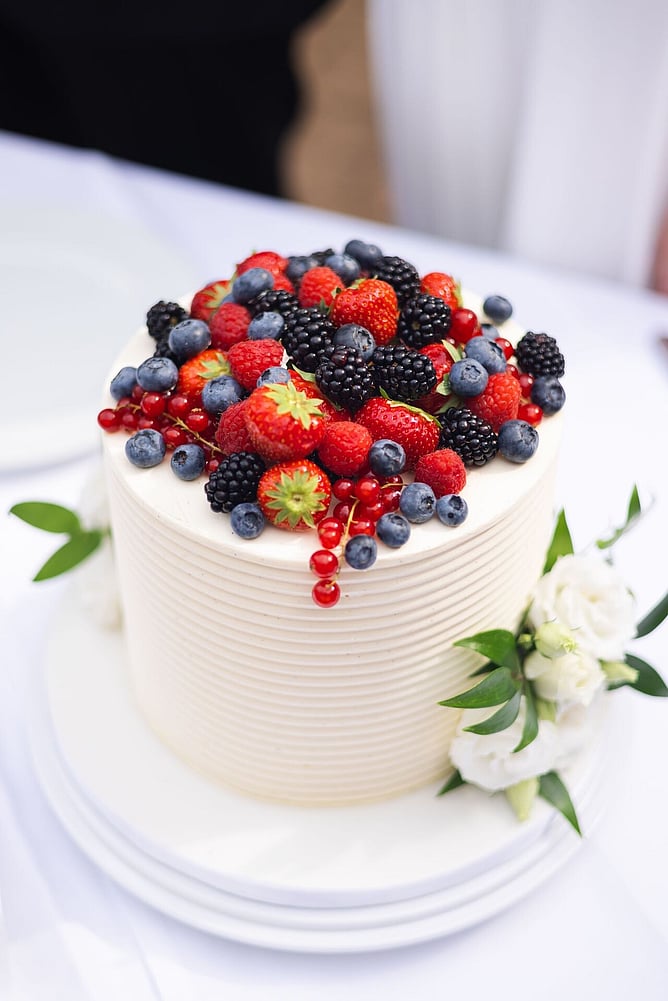
Naked or semi-naked cakes with little or no outer icing, often finished with berries and fresh flowers.
Cutting cakes, a small display cake used for the ceremonial cut, with extra cake served from the kitchen.
Dessert-style cakes, such as cheese wheel towers, croquembouche or doughnut stacks.
Italian wedding cake, a layered cake with coconut, pecans and cream cheese frosting. It is a popular wedding choice in the US. In Italy itself, the traditional wedding cake is the millefoglie: layers of puff pastry with cream and berries.
How Much Is a Wedding Cake in NZ?
Wedding cake prices vary widely depending on the baker, the region, the flavour and, above all, the design. As one industry guide puts it, design complexity affects the price far more than size does. A simple two-tier cake with fresh flowers can cost a fraction of a three-tier cake with hand-crafted sugar flowers, even if both serve the same number of guests.
The figures below are rough New Zealand dollar estimates to help you set a starting budget. Always request quotes from local bakers, as prices differ between cities and designers.
1-tier wedding cake
Best for intimate weddings or as a ceremonial cutting cake. Expect roughly $150 to $350, serving around 20 to 30 guests.
2-tier wedding cake
A popular balance of impact and value. Expect roughly $350 to $700, serving around 40 to 60 guests.
3-tier wedding cake
The classic choice for mid-sized weddings. Expect roughly $600 to $1,200, serving around 75 to 120 guests.
4-tier wedding cake
A statement cake for larger guest lists. Expect roughly $1,000 to $1,800, serving around 100 to 150 guests.
5-tier wedding cake
A showpiece for large or very formal celebrations. Expect roughly $1,600 to $3,000 or more, serving 150 guests and up.
A handy rule of thumb used by many cake designers is to plan about one tier for every 30 servings. Remember that a "cutting cake" plus extra sheet cake from the kitchen can serve more people for much less.
What pushes the price up:
Fondant or intricate piping instead of simple buttercream
Hand-made sugar flowers, hand painting or metallic finishes
Multiple flavours or specialty fillings
Gluten-free, dairy-free or vegan requirements
Delivery, setup and stand hire
A cake-cutting or serving fee charged by your caterer, if applicable
How Far in Advance Should You Order a Wedding Cake?
The popular advice is to order as early as you comfortably can. Skilled bakers book out, particularly for peak-season Saturdays, and booking early secures both your date and your preferred designer.
New Zealand cake makers have suggested booking around six to nine months ahead for a summer wedding, and around three to four months ahead for a winter wedding. International guides often recommend six months or more, and up to twelve months for peak season dates.
It helps to confirm the bigger details first, such as your guest count, date, colour palette and florals, before the final design is locked in. A sensible timeline looks like this:
9 to 12 months before: Start researching bakers and enquire about availability.
6 to 9 months before: Book your baker and pay the deposit.
2 to 3 months before: Finalise flavours, design and any toppers or decorations.
Final weeks: Confirm delivery, setup time and the guest count.
What Is the Best Wedding Cake Flavour?
There is no single best flavour. The right choice is the one you and your guests will genuinely enjoy. That said, a few favourites show up again and again.
Vanilla: Light, familiar and a safe crowd-pleaser. It pairs well with almost any filling.
Chocolate: Rich and indulgent, wonderful with salted caramel, raspberry or hazelnut.
Lemon: Fresh and zesty, especially lovely for summer weddings. Lemon and raspberry is a perennial favourite.
Carrot cake: Moist and spiced with cream cheese icing, a firm Kiwi favourite.
Red velvet: A striking colour with a gentle cocoa flavour.
Fruit cake: The traditional choice, and it keeps well if you plan to save the top tier.
Coffee, tiramisu or citrus flavours: Increasingly popular for couples who want something a little different.
A few tips for choosing:
Book a tasting and try the combinations you are considering.
Use different flavours in different tiers so guests have a choice.
Think about the season: lighter citrus and berry flavours suit summer, while spiced and chocolate flavours feel right in cooler months.
Check for allergens and dietary needs among your guests early, and ask your baker about gluten-free, nut-free or vegan options.
Vanilla, chocolate and lemon are among the most popular choices, and happily they tend to be among the more affordable ones too.
Why Do Couples Cut the Cake Together? What Does It Symbolise?
Three of the most common questions about the wedding cake are really one question: why is cutting the cake a tradition, what does it symbolise, and why do couples do it together? The answers are closely connected.
The origins of the tradition
The custom is said to trace back to ancient Rome, where a loaf of barley bread was broken over the bride's head as a symbol of fertility and good fortune, and guests gathered up the crumbs for luck. In medieval England, guests brought small cakes or buns that were stacked into a pile, and the couple would try to kiss over the top without knocking it over, a sign of prosperity for their future.
Over time, these customs evolved into a single, decorated cake. By the Victorian era, the white, tiered wedding cake had become a fixture of the reception.
What cutting the cake symbolises
Cutting the cake is often described as the first task the couple completes together as a married pair. It represents:
Partnership and unity: Two people sharing one knife and one task.
Shared prosperity: The cake is a symbol of abundance and good fortune for the years ahead.
Sharing joy with others: Offering slices to guests is a gesture of generosity and a way of inviting everyone to share in the couple's happiness.
Sweetness in marriage: Feeding each other a bite represents the promise to care for and provide for one another.
Why do couples do it together?
Traditionally, the bride cut the cake and handed out the pieces, which folklore said to bring fertility. As guest lists grew, the groom began to help, resting his hand over hers. The pose stuck and took on a new meaning: cutting together reflects the equal partnership at the heart of a modern marriage, and it makes for a photograph couples treasure for years.
When Does Cake Cutting Happen at a Wedding?
There is no fixed rule, but the cake is most commonly cut after the main meal and before or just after the speeches, and before the dancing begins. Cutting at this point means guests are seated and attentive, the lighting is good for photos, and the cake can be served as dessert or alongside tea and coffee.
Other common options include:
Before dessert, so the cake can be served as the dessert course.
After the first dance, which can keep guests engaged as the evening gets going.
Later in the evening, if you would like to give guests a sweet treat while the party continues.
Chat with your MC, photographer and caterer so everyone knows the plan. The photographer in particular will want to be ready, as this is one of the key photographs of the day.
What Is the Etiquette for Cutting a Wedding Cake?
Cake cutting is relaxed and joyful, but a few simple etiquette points keep it running smoothly.
Make an announcement. Ask the MC to invite guests to gather around, or at least to turn their attention to the couple.
Position for photographs. Stand behind the cake, with the knife in hand and both of you holding it. Traditionally the bride's hand is on the knife with the groom's hand placed over hers, though any arrangement works.
Cut the first slice together. Make a small, clean cut at the bottom tier. Your caterer or baker can show you where to cut so it comes away easily.
Feed each other a bite. Keep it gentle and affectionate. Smashing cake into your partner's face is a matter of taste, so agree beforehand whether you are both comfortable with it.
Let the professionals take over. After the ceremonial cut, the caterer or a helper should slice and serve the rest so you can return to your guests.
Serve in a sensible order. Many couples have their parents and grandparents served first, followed by the wider guest list.
Thank everyone. A quick word of thanks to the baker and guests is a thoughtful touch.
If there are any dietary needs among your guests, make sure the serving team knows which slices are suitable.
Why Do People Freeze Wedding Cake?
The tradition of freezing the top tier is a popular one. It began as a way of saving a portion of the cake for a future celebration. In earlier eras, couples saved the top tier to serve at the christening of their first child, which was expected to arrive within a year. Over time it became a tradition to save the top tier to share on the couple's first wedding anniversary instead.
Freezing is a lovely way to bring back a little of the day, and a sentimental way to mark your first year of marriage.
How to freeze wedding cake properly:
Remove any decorations, fresh flowers and toppers.
Chill the cake in the fridge for an hour or so to firm up the icing.
Wrap it tightly in several layers of cling wrap, leaving no gaps.
Wrap in a layer of foil, then place in an airtight container or box.
Freeze, then defrost slowly in the fridge for a day before serving.
A practical note: richly fruited cakes keep best, while sponge cakes and delicate fillings can lose their texture over twelve months. Many couples these days choose to order a small fresh cake for their anniversary instead, which tastes better and saves the worry. Ask your baker which option they recommend for your flavour.
How to Save Money on a Wedding Cake
A beautiful cake does not have to take over your budget. These ideas can help.
Order a small cutting cake plus a sheet cake. Display a smaller decorated cake for the ceremony, and serve guests from simple cakes cut in the kitchen. This is one of the most effective savings.
Choose a simpler finish. Buttercream usually costs less than fondant, and fresh flowers can replace expensive sugar work.
Limit the number of flavours. Each extra flavour or specialty filling adds to the price.
Go for fewer tiers. Tiers can be partly dummy (decorative polystyrene), which saves on cost while keeping the look.
Cut square slices. Square portions can be cut more efficiently than wedges, giving you more servings.
Pick popular flavours. Vanilla, chocolate and lemon are usually among the most affordable options.
Be upfront about your budget. Tell your baker your price range at the start so they can design around it.
Ask about extra charges. Check for delivery, setup, stand hire and any serving fee from your caterer before you book.
Book early. Ordering well in advance can lock in a price before any increases.
What to Have Instead of a Wedding Cake
Not everyone wants a traditional cake, and there are plenty of delicious and memorable alternatives.
Dessert table or grazing display. An array of treats, from mini tarts to macarons, lets guests pick their favourites.
Cupcake tower. Easy to serve, with room for several flavours.
Doughnut wall or tower. Fun, casual and very photogenic.
Croquembouche. A French tower of cream-filled choux pastry bound with caramel.
Cheese tower. A stack of cheese wheels, a great option for those who prefer savoury.
Pavlova. A Kiwi classic with fresh seasonal fruit and cream.
Pie tower or sweet pie selection. A relaxed, comforting option.
Ice cream or gelato bar. Perfect for summer celebrations.
Cookie or brownie stacks. Simple, affordable and easy for guests to enjoy.
Cake for the cut only. A small cake for the photo, with a separate dessert for guests.
If you still want the ceremonial moment, you can cut into anything, from a pavlova to a wheel of brie.
Frequently Asked Questions
How much wedding cake do I need per guest? Plan on one serving per guest, and a few extras if you want leftovers. A common guide is one tier for every 30 guests.
Do you have to have a wedding cake? No. A wedding cake is a tradition, not a requirement. Many couples choose a dessert table or a different centrepiece.
Who traditionally pays for the wedding cake? Traditions have varied over time, but today the cake is usually part of the overall wedding budget, paid for by the couple or whoever is funding the wedding.
Can I make my own wedding cake? Yes, if you are confident baking, but consider storage, transport and stress levels on the day. Many couples ask a friend or family member to help, or buy a simple cake and decorate it with fresh flowers.
Final Thoughts
Whether you choose a classic three-tier cake, a naked cake with fresh blooms or a tower of pavlovas, the best wedding cake is the one that reflects you both and tastes wonderful. Book your baker early, be clear about your budget, and take the time to enjoy the tasting.