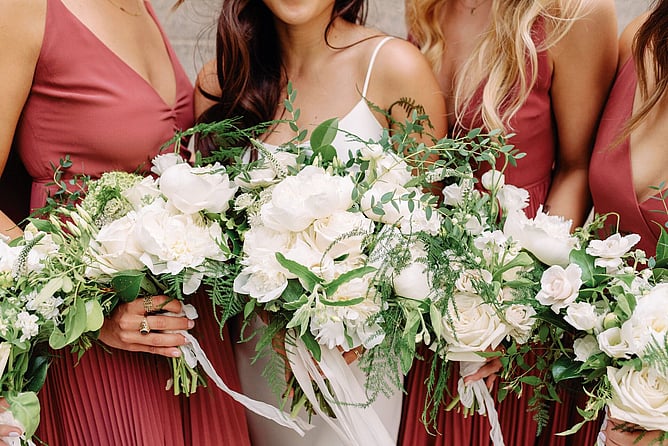
Choosing a wedding florist comes down to three things: a style you love, a quote that fits your budget and availability on your date. This New Zealand guide explains what florists do, when to book, what flowers cost, which questions to ask and how to keep your blooms fresh.
What Is a Florist, and What Does a Wedding Florist Do?
A florist is a trained or experienced professional who selects, prepares, arranges and sells flowers. A wedding florist applies those skills to one date, where every arrangement has to look its best at the same time.
Some florists run retail shops and take on weddings alongside daily orders. Others work from private studios and focus mainly on weddings and events.
A wedding florist will usually:
Talk through your style, colours, venue, guest numbers and budget
Recommend flowers and foliage that suit the season
Prepare an itemised quote and a design proposal
Order stems from growers, auctions or wholesalers
Condition the flowers by trimming and hydrating them before arranging
Make bouquets, buttonholes, corsages and flower crowns
Design ceremony arches, aisle flowers, table centrepieces and cake flowers
Deliver, install and sometimes move arrangements from ceremony to reception
Collect hired vases, stands and frames afterwards
Not every package includes delivery, set-up or pack-down, so check what your quote covers.
When to Book a Florist for Your Wedding
Aim to book your wedding florist 6 to 9 months ahead. Start earlier if you have a popular date, such as a Saturday between November and April, or your heart is set on a particular florist.
A simple timeline looks like this:
9 to 12 months before: Confirm your date and venue, set a budget and collect inspiration.
6 to 9 months before: Meet florists, compare quotes and pay the deposit to secure your date.
3 to 6 months before: Refine colours, flower choices and the list of arrangements.
4 to 6 weeks before: Confirm numbers, table layout, delivery addresses and timings.
The final week: Share a day-of contact person and check any last-minute changes.
Planning at short notice? It is still worth asking. Winter and weekday dates may offer more flexibility, especially if you let the florist choose from what is available.
How to Find a Wedding Florist
The best way to find a wedding florist is to build a shortlist of three or four from several places, then compare them side by side.
Search locally. Try "wedding florist" with your town or region.
Ask people you trust. Recently married friends and family can tell you how a florist performed on the day.
Browse social media. Recent posts show a florist's current style.
Check wedding directories and magazines. Real wedding features often credit the florist.
Visit local flower shops and markets. Ask whether they take wedding bookings.
How to Select a Wedding Florist
Select the florist whose real work, communication and pricing all give you confidence.
Define your style. Save 10 to 15 images and note what you like in each: colour, shape, texture or scale. Note what you dislike too.
Set your budget and priorities. Decide which pieces matter most, such as the bridal bouquet or ceremony arch.
Review complete weddings. A full gallery shows consistency better than a few highlight shots.
Read recent reviews. Look for comments on punctuality, freshness and how closely the flowers matched the plan.
Book a consultation. A good florist listens, asks questions and is honest about what your budget can achieve.
Compare itemised quotes. Check quantities, sizes, flower types, delivery, set-up and GST.
Read the contract. Confirm the deposit, payment dates, cancellation terms and substitution policy.
Be cautious if pricing is vague, there is no written agreement or the florist cannot show examples of past work.
What to Ask a Florist for Your Wedding
Ask about availability, design, cost and wedding-day logistics before you pay a deposit.
Availability and experience
Are you available on our date, and how many other weddings will you take that day?
Have you worked at our venue or in a similar space?
Who will design, deliver and set up our flowers?
What happens if you are ill or have an emergency?
Flowers and design
Which flowers will be in season for our wedding?
What would you suggest for our colours, style and budget?
What will you substitute if a flower is unavailable or poor quality?
Can we see a sample bouquet or centrepiece, and is there a fee?
Can ceremony flowers be reused at the reception?
Can you avoid flowers that trigger allergies or are unsafe for pets?
Cost and contract
Is there a minimum spend?
What does the quote include, and are prices GST inclusive?
Are delivery, set-up, pack-down and vase hire extra?
How much is the deposit, and when is the balance due?
When is the last date to change numbers or designs?
What are your cancellation and postponement terms?
On the day
What time will the flowers arrive, and who needs to receive them?
How should we store the bouquets until the ceremony?
Who will move arrangements and collect hired items?
How Much Does a Florist Cost for a Wedding?
In New Zealand, fresh wedding flowers commonly cost about $1,500 to $3,500. Small weddings can sit at the lower end or below, while large bridal parties and installations can cost much more. A common guide is to allow 10% to 15% of your total wedding budget.
As a rough indication, based on a small sample of published Auckland florist prices:
Bridal bouquet: about $150 to $300 or more, with cascading designs from around $500
Buttonholes: about $15 to $25 or more each
Table flowers: from about $40 for bud vase arrangements to $250 or more for large centrepieces
Ceremony arch: from a few hundred dollars for a partial design to $2,000 or more for a full floral arch
Delivery and set-up: often charged separately
These figures are guides only. Your price depends on flower types, season, size, quantity, labour, location and installation time.
How to save on wedding flowers
Choose seasonal, locally grown blooms
Give your florist freedom to select the best stems within your colour palette
Spend on a few high-impact pieces and keep the rest simple
Move ceremony arrangements to the reception
Use more foliage and fewer premium blooms
Mix bud vases with a smaller number of large centrepieces
Avoid dates near Valentine's Day, when demand for flowers is high
Where Do Florists Get Their Flowers?
Florists get their flowers from auctions, wholesalers, growers and importers, and many use a mix.
Flower auctions: A significant share of New Zealand-grown flowers is sold at auction, where trade buyers now bid online.
Wholesalers: They gather flowers from different growers and suppliers.
Local growers and flower farms: Buying direct can offer seasonal and unusual varieties.
Importers: Overseas stock helps fill seasonal gaps and supplies some blooms that are not widely grown locally.
Their own gardens: Some florists grow selected flowers or foliage.
If local or sustainable flowers matter to you, ask where the stems will come from.
Wedding flowers by season in New Zealand
Availability varies with region and weather, but these seasonal examples are a useful starting point:
Spring (September to November): tulips, ranunculus, anemones, sweet peas and peonies
Summer (December to February): dahlias, hydrangeas, roses, delphiniums and sunflowers
Autumn (March to May): dahlias, chrysanthemums, proteas, zinnias and lisianthus
Winter (June to August): calla lilies, proteas, anemones, ranunculus and cymbidium orchids
How Long Do Florist Flowers Last?
Many cut flowers last about a week in a vase, but the range is wide. Carnations and chrysanthemums can last around two weeks, while roses and gerberas may last less than a week.
Freshness also depends on variety, maturity, temperature, handling and water. Wedding bouquets and installations spend time handled or out of water, so plan for them to look their best on the day itself. Ask your florist which blooms will cope with heat and wind.
How to Keep Florist Flowers Alive Longer
To keep florist flowers alive longer, give them clean water, fresh cuts, flower food and a cool spot.
Wash the vase in hot, soapy water.
Trim 1 to 2.5 cm from each stem with a sharp knife or clean snips.
Remove any leaves that would sit below the waterline.
Add commercial flower food, following the packet directions. It is more reliable than home remedies such as aspirin or coins.
Keep flowers in a bright, cool place, away from direct sun, heaters and draughts.
Check the water daily. Replace it every two to three days, or sooner if it turns cloudy.
Remove fading blooms and yellowing leaves.
Wedding-day flower care
Keep bouquets in their water containers until needed, if your florist supplies them
Dry the stems before photos to protect clothing
Never leave flowers in a parked car or in full sun
Follow your florist's advice before refrigerating anything, as some blooms dislike the cold
Keep lilies away from pets, particularly cats, because they are highly toxic to them
To keep your bouquet as a memento, arrange drying, pressing or preservation before the wedding so it can be handled while still fresh.
Choosing Your Wedding Florist With Confidence
Start early, be open about your budget and stay flexible with seasonal flowers. Shortlist a few florists, ask the questions above and get every detail in writing. The right wedding florist will turn your ideas into flowers that feel like you.