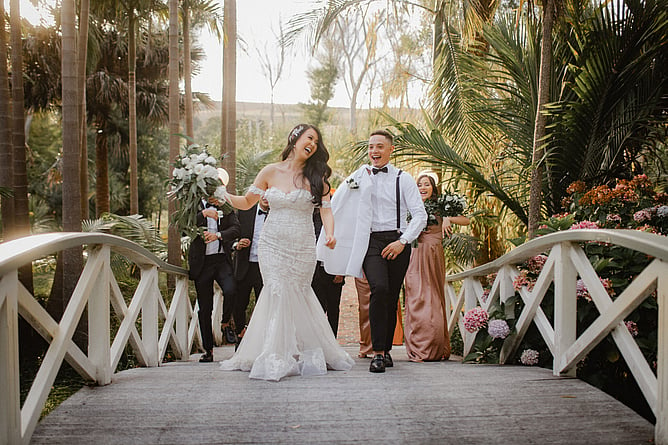
Planning a garden wedding means working with conditions that change with weather, light, and ground surfaces. Unlike indoor venues where layout and comfort stay consistent, outdoor spaces shift across the day. Grass softens after rain, wind affects décor, and shade moves as the sun changes position.
This checklist focuses on the practical adjustments that matter in a garden setting, based on how outdoor weddings actually run on the day.
12–18 Months Before
Choose venue (with ground and weather in mind)
Look closely at the lawn itself, not just the ceremony photos. Check whether the ground stays firm after rain or becomes patchy in shaded areas. Ask where guests would stand if the weather changes suddenly. Some garden spaces look open but don’t have usable flat areas for seating once chairs are placed.
Also confirm where shelter can realistically go if conditions shift. It’s not just about having a backup room, but whether guests can move there without disrupting the ceremony flow.
Check this article to read our complete guide to choosing garden wedding venues.
Check seasonal light at ceremony time
Garden weddings are shaped by sun direction. Afternoon ceremonies can leave guests facing direct light, especially in open lawns with no tree cover. Visit the site at the same time of day as your planned ceremony to see where shadows actually fall.
Plan walking routes on grass
Think about how guests will arrive and move through the space. In garden settings, paths often form naturally rather than being fixed. Without clear direction, guests tend to spread across lawns or avoid damp patches, which can shift seating areas unintentionally.
9–12 Months Before
Plan sound for open air, not just volume
Sound doesn’t carry evenly outdoors. Even a light breeze can affect vows and speeches. Check whether microphones will be needed for both ceremony and reception, and where speakers can be placed without cables crossing walkways or grass seating areas.
Confirm supplier access to outdoor areas
Garden venues often have limited vehicle access close to ceremony spots. This affects how quickly florals, seating, and equipment can be set up. It’s worth checking whether suppliers need to carry items across grass or through narrow entry points.
6–9 Months Before
Choose seating that behaves well on grass
Chair stability becomes an issue in soft ground. Lightweight chairs can tilt slightly on uneven lawns, especially if the ground has been watered recently. Heavier seating or chairs with broader legs tend to hold position better.
Also consider aisle layout. On grass, aisles can narrow during setup if rows are not carefully spaced, particularly on slopes.
Design décor that can hold position outdoors
Anything light enough to move in the wind needs securing. Table numbers, arches, and signage often require weighted bases or ground fixing. Even on calm days, small gusts can shift items unexpectedly.
Floral arrangements also behave differently outdoors. Heat exposure shortens freshness, while shade can create uneven ageing across tables if not planned.
3–6 Months Before
Plan catering around distance and exposure
Outdoor catering is affected by how far food travels before reaching guests. If service is from a separate prep area, timing can shift slightly, especially for plated meals.
Buffet setups need protection from insects and dust, depending on location and time of year. Drink stations placed in full sun can warm quickly, so ice and glassware need more frequent rotation than indoor service.
Lock in a weather transition plan that actually works
A wet-weather backup plan is not just about having a marquee or an indoor hall. It should also consider how quickly guests can be moved without confusion, whether the ground beneath the marquee is stable enough, and what the venue would do if the couple insists on staying outdoors despite the rain.
1 Month Before
Walk the garden after recent weather
Conditions can change week to week. Areas that looked dry earlier may become soft after irrigation or rain. Check where water pools or where grass wears down from foot traffic.
This is also when guest flow becomes clearer. You’ll see whether people naturally cluster in shaded areas or avoid certain parts of the lawn.
Finalise layout based on real ground conditions
Set seating spacing wider than you would indoors. On grass, guests often need more room to adjust chairs slightly for balance. Tables also need extra clearance so service staff can move without stepping onto uneven patches.
Day Before the Wedding
Check setup with movement in mind, not just placement
Walk through the space as if you are a guest arriving late. Look for cable crossings, uneven edges, or seating that shifts when tested. In garden weddings, small alignment issues become more noticeable once guests start moving.
Track weather changes hour by hour
Garden weddings often rely on timing decisions. A slight change in wind or cloud cover can shift comfort levels quickly, especially for ceremonies without cover. Final decisions about ceremony placement or backup use are usually made closer to the day than indoor events.
Printable Outdoor Wedding Checklist
Check lawn stability after rain or irrigation
Confirm ceremony sun direction at exact time
Map guest walking paths across grass
Test sound coverage for open-air vows and speeches
Confirm supplier access across outdoor terrain
Choose seating suitable for uneven ground
Secure décor against wind movement
Plan catering distance and food protection
Prepare realistic weather transition plan
Inspect garden after recent weather changes
Adjust layout for grass movement and spacing
Walk through setup as guests will experience it
Garden weddings depend on how well the venue holds up under real conditions, not just how it looks in photos. When ground, light, and movement are planned early, the setup feels more stable on the day and fewer adjustments are needed in real time.
Bring Your Garden Wedding to Life
A beautiful outdoor wedding starts with the right venue. Visit our outdoor wedding venue page to find the perfect setting for your ceremony and reception, or contact our team to arrange a tour and discuss your wedding plans. We're here to help you create a day that's as practical as it is unforgettable.